When is Earth closest to the Sun?

On January 3, 2026, many places in the northern hemisphere were cold. It snowed in some places. It’s winter!
But, on that day, Earth was closest to the Sun in its orbit (Earth’s path around the Sun). Shouldn’t it be warmer if Earth is closer to the Sun? That is a good question.
Photo Credit: Dainis Derics/iStock/Getty Images
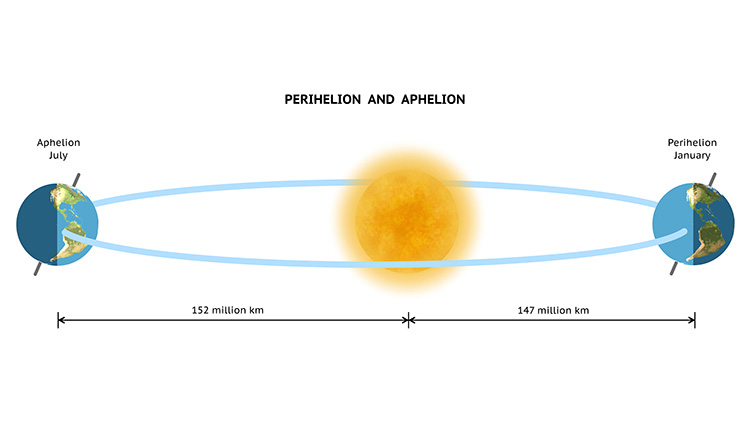
The answer has to do with Earth’s axis (an imaginary line through the middle of Earth from top to bottom). It is tilted (not straight up and down). This causes seasons (weather changes throughout the year: spring, summer, fall, and winter).
Photo Credit: J. Marini/Shutterstock
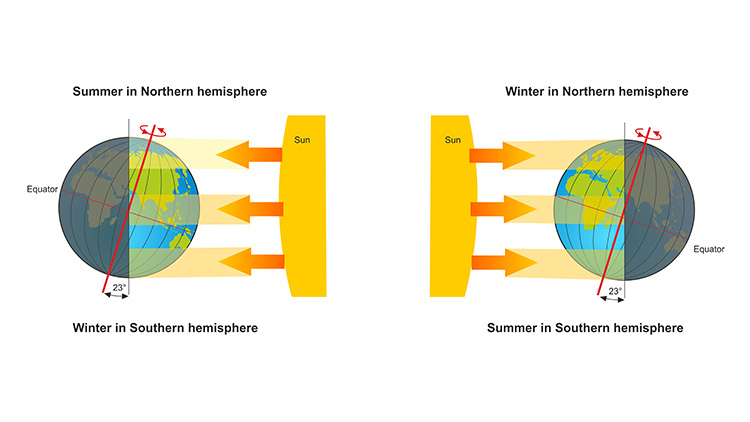
The northern hemisphere is tilted away from the Sun in the winter. Days are shorter. There is less sunlight. Temperatures decrease.
The northern hemisphere is tilted toward the Sun in the summer. Days are longer. There is more sunlight. Temperatures increase. Even though Earth is farthest from the Sun in July.
What Can You Do? Is it cold in January where you live?
Photo Credit: Soleil Nordic/Shutterstock